
Jupiter Past Resident Eras
The right source depends on the period and on whether the goal is to find an owner or an occupant. Jupiter incorporated in 1925, while Palm Beach County was created in 1909. County deed and court systems hold the durable property trail. Town records add permits, local deeds and easements, code matters, maps, and later development files.
| Source | Years it covers | Where held | What it shows |
|---|---|---|---|
| PAPA parcel and sales | Current database; start not stated | Property Appraiser | Current owner, addresses, legal description, transfer references |
| Official Records | Images mainly 1968 onward | Landmark and County Clerk | Deeds, mortgages, liens, plats, prior owners |
| Town building files | Before and after October 1, 2015 use separate routes | Town Clerk and Community Development | Permits, projects, work, applicants, dates |
| City/reverse directories | Exact Jupiter run not verified | PBCLS, historical societies, State Library | Named occupants where a regional volume covers Jupiter |
| Federal census | Public through 1950 | NARA or library databases | Household members, tenure, neighbors |
| Town/history collections | Series vary from the late 1800s onward | Town Archives, HSPBC, lighthouse museum | Maps, photos, clippings, local families, development context |
Begin with the newest reliable record. A recent parcel card and deed can lead backward. For an older home, a librarian or the Clerk's counter can bridge the point where public web images stop.
Start Jupiter History With PAPA
Search the address in PAPA Advanced Search. Copy the current owner, location and mailing addresses, PCN, municipality, subdivision, full legal description, and acquisition book/page. The situs address is the physical site. The mailing address is where the owner receives tax mail. They may match, but neither field proves who else occupied the home.
PAPA also gives sales and transfer references, map links, property use, structural facts, and values. Those details can help date a likely change, yet assessment data may lag a deed. Use the parcel card as the index card for the next step, not as a final title finding.
When a Jupiter mailing address is in Jupiter Farms, the parcel is in unincorporated Palm Beach County. Checking Municipality and ZIP separately prevents Town searches from missing county-held records.
Follow Palm Beach Deeds Backward
A deed chain follows the same land from today's owner to each prior transfer. Names alone are unsafe because two people can share a name and one person can appear under variants. The legal description, PCN, book/page, and transfer dates keep the chain on the same property.
- Open the current owner's acquisition deed in Landmark Official Records. Record the grantor, grantee, instrument, date, and legal description.
- Search that grantor as an earlier grantee. Match the same legal description before accepting the prior purchase.
- Repeat seller to buyer. Keep a short log of every instrument and unresolved variation.
- At the online image cutoff, take the book/page and legal words to Clerk Records Research.
- Add occupants later from directories, census schedules, newspapers, probate, and permits. Do not label deed parties as a full household.
- Grantor
- The person or entity transferring an interest in the property.
- Grantee
- The person or entity receiving that interest.
- Chain of title
- The linked series of transfers for the same land.
- Legal description
- The recorded lot, block, subdivision, or survey wording that identifies land beyond its street address.
The process reveals past owners with more confidence than a reverse name search. It still does not prove that each owner lived at the site.
Cross Jupiter's 1968 Image Line
Landmark's deed images generally begin in 1968. Marriage listings reach 1909, and plats or right-of-way maps may reach the late 1800s. When a previous residents search reaches an older deed book, call Clerk Records Research at 561-355-2932, visit the Main Courthouse fourth-floor records room, email ORWEB@mypalmbeachclerk.com, or mail the Clerk at P.O. Box 4526, West Palm Beach, FL 33402-4526.
A mail request should state the exact name and date span, requester details, a self-addressed stamped envelope, and the required fee or check. Broader name variants matter because indexing practice changed in 2024. Some document classes cannot be shown on the public Internet and need a lawful counter or mail copy request.
Record tip. Carry the legal description and book/page across the cutoff. An old street spelling by itself may not find the deed.
Jupiter Plats Bridge Changed Streets
No official source found a single townwide Jupiter street-renumbering year. The chief break is development. Jupiter grew slowly from incorporation through the early 1990s, then former MacArthur Foundation lands became Abacoa, Bear's Club, and other communities. Many modern streets therefore have no early directory past.
Use a recorded plat, subdivision name, lot and block, or PCN when an address disappears. Plats show the lot layout and street framework. Town zoning GIS also exposes History Point, History Polyline, and History Polygon layers that can connect a modern parcel with earlier development context. A map explains the gap, but the deed establishes the transfer.
Date Jupiter Resident History With Permits
Building and code files can mark construction, additions, repairs, applicants, contractors, and case dates. They support the physical history of a house and may explain when a structure changed. They are not proof that every named person lived there.
Jupiter separates records at October 1, 2015. Use the legacy search or request route for earlier records, and the Community Development System for later ones. In the current system, switch Display from Active to All and search by number, project, or address. Building can help at 561-741-2286. The Town records page displays these routes. The split explains why one address search can appear incomplete even when records exist.
A free code and lien request states five to seven business days. Water-lien questions go to Utilities, sewer issues to the Loxahatchee River Environmental Control District, and Jupiter Farms code files go to Palm Beach County.
Pair Jupiter Directories and Census
Deeds trace landowners. Directories and census schedules can add non-owner occupants. Official research did not confirm a complete Jupiter printed directory run, so ask Palm Beach County Library staff to check regional Palm Beach or West Palm Beach telephone and Polk volumes. A reverse section, when present, orders entries by street and house number. The Jupiter city directories page covers the shelf and entry format in detail.
- Find a verified directory volume that actually covers Jupiter, then search the address in its reverse section.
- Copy names, house number, spouse notation, occupation, and abbreviations exactly. Read that volume's key.
- Compare the nearest earlier and later editions for moves or household changes.
- For 1950 or earlier, pair the result with the decennial census. If the name index fails, browse the enumeration district.
- Use deeds and permits to keep the household evidence tied to the right parcel.
Census schedules are public through 1950 under the 72-year rule. They can show household members, tenure, and nearby households. The 1890 loss was a national census fire, not a Palm Beach courthouse loss.
Jupiter Archives Add Local Context
The Historical Society of Palm Beach County holds photographs, postcards, manuscripts, diaries, maps, and artifacts. Its Reading Room can help place previous residents in a neighborhood, business, or family setting when official land records give only names and dates. Consult the Historical Society archive and reading-room information before arranging research.
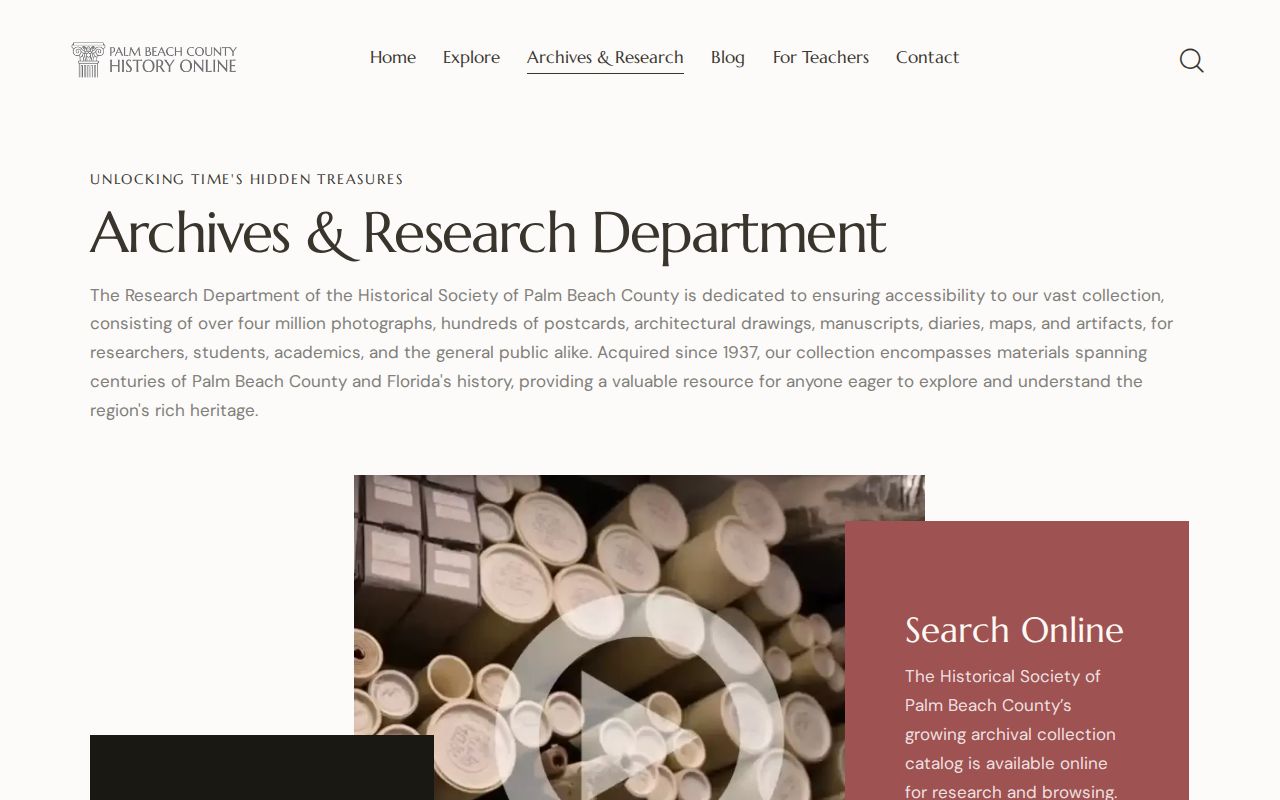
The archive is appointment-based and can supply context that a parcel card cannot.
Jupiter's Town Archives lists deeds and easements, maps from 1914 to 1988, street-name files, early legal and utility material, lighthouse-area files, newspaper clippings, Abacoa, and planning projects. The Jupiter Inlet Lighthouse & Museum adds pioneer and lighthouse history. These collections are strongest when the search includes a family name, street, subdivision, event, and date span.
Jupiter Resident Memory at Centennial
Jupiter's 2025 centennial work expanded a community-memory layer through mapped history, exhibits, and a video journey addressing Indigenous, pioneer, and settlement periods. It is context rather than proof of residence, yet it can supply old place names, family references, and development themes that guide a focused archive request.
The Town's Video Journey Through Time presents that local history collection.
Names found there should be verified against deeds, directories, census schedules, or other primary records.
Close Jupiter Trails With Life Records
An obituary or public probate file can explain what happened after a person left an address. Search public probate by decedent in Palm Beach County, then compare heirs, dates, notices, and later deeds. Newspapers may connect relatives, clubs, burial places, and former addresses. The Palm Beach County Library genealogy databases include census, newspaper, map, and family-history sources, though access may require a library card or branch visit.
Vital certificates have separate access rules. An adult may order a death certificate without cause, while cause is restricted for deaths less than 50 years old. Birth records remain confidential under Florida law, and eligibility depends on relationship or authority. The official Florida vital-record forms hub provides the current applications and terms.
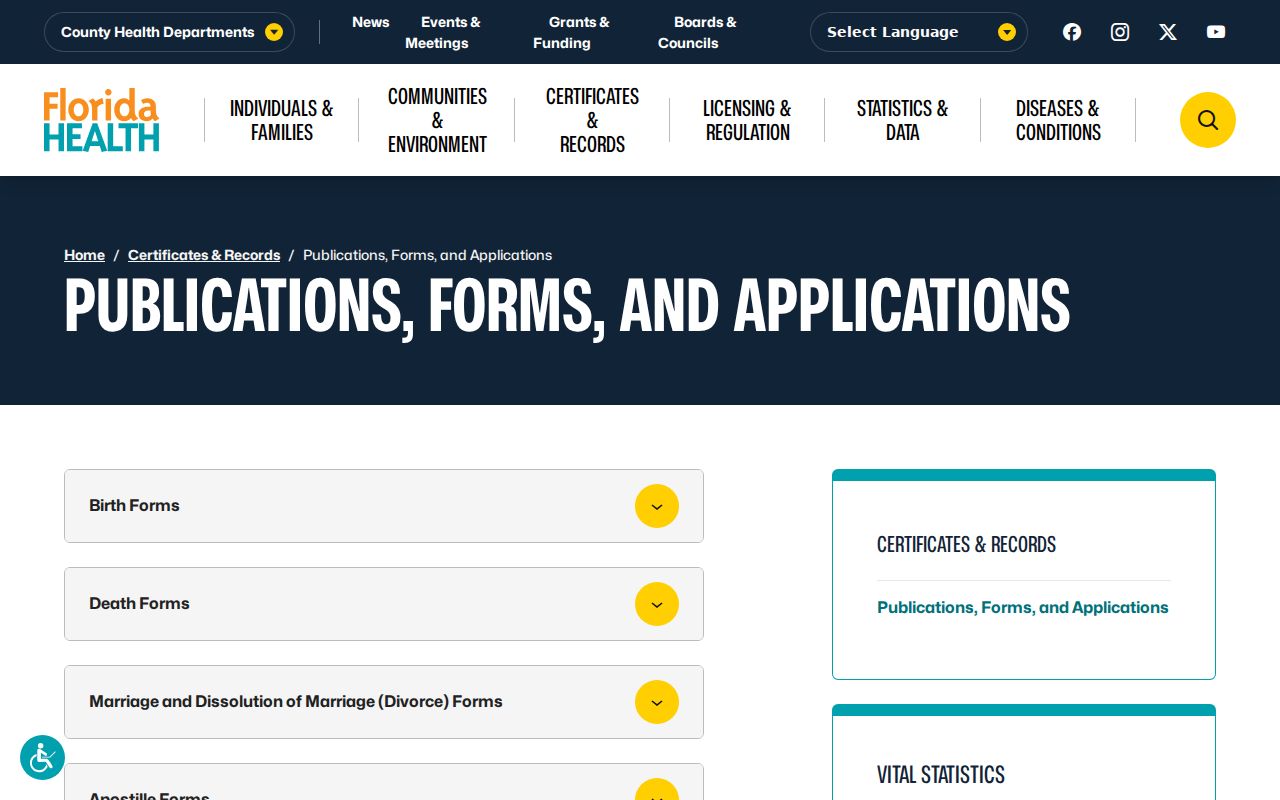
A certificate can confirm an event, while an index or obituary remains a finding aid that should be checked.
Use Jupiter Past Records Lawfully
Previous residents research is best suited to house history, genealogy, estate work, and lawful personal curiosity. Public availability does not turn a name or address into permission for unwanted contact. Protected addresses, sealed cases, adoption files, confidential voter details, and restricted vital information remain outside ordinary access.
Label conclusions with care. “Owner on the parcel card” is not the same as “occupant.” “Named in a permit” may mean contractor or applicant. “Found in an obituary” may show a relationship, not residence at the search address. Two sources that agree on name, time, and place make the trail stronger.
Lawful use. Trace Jupiter previous residents for legitimate personal research. Never use an address trail to stalk, harass, threaten, or track a living person.